Lift Stations
In the complex world of stormwater and septic management, ensuring the efficient and safe transportation of wastewater is paramount. At the heart of these systems lie lift stations, essential components designed to facilitate the movement of wastewater from lower to higher elevations, enabling it to reach treatment facilities or disposal sites. This article delves into the significance of lift stations and how they integrate with broader stormwater management systems and septic system maintenance practices.
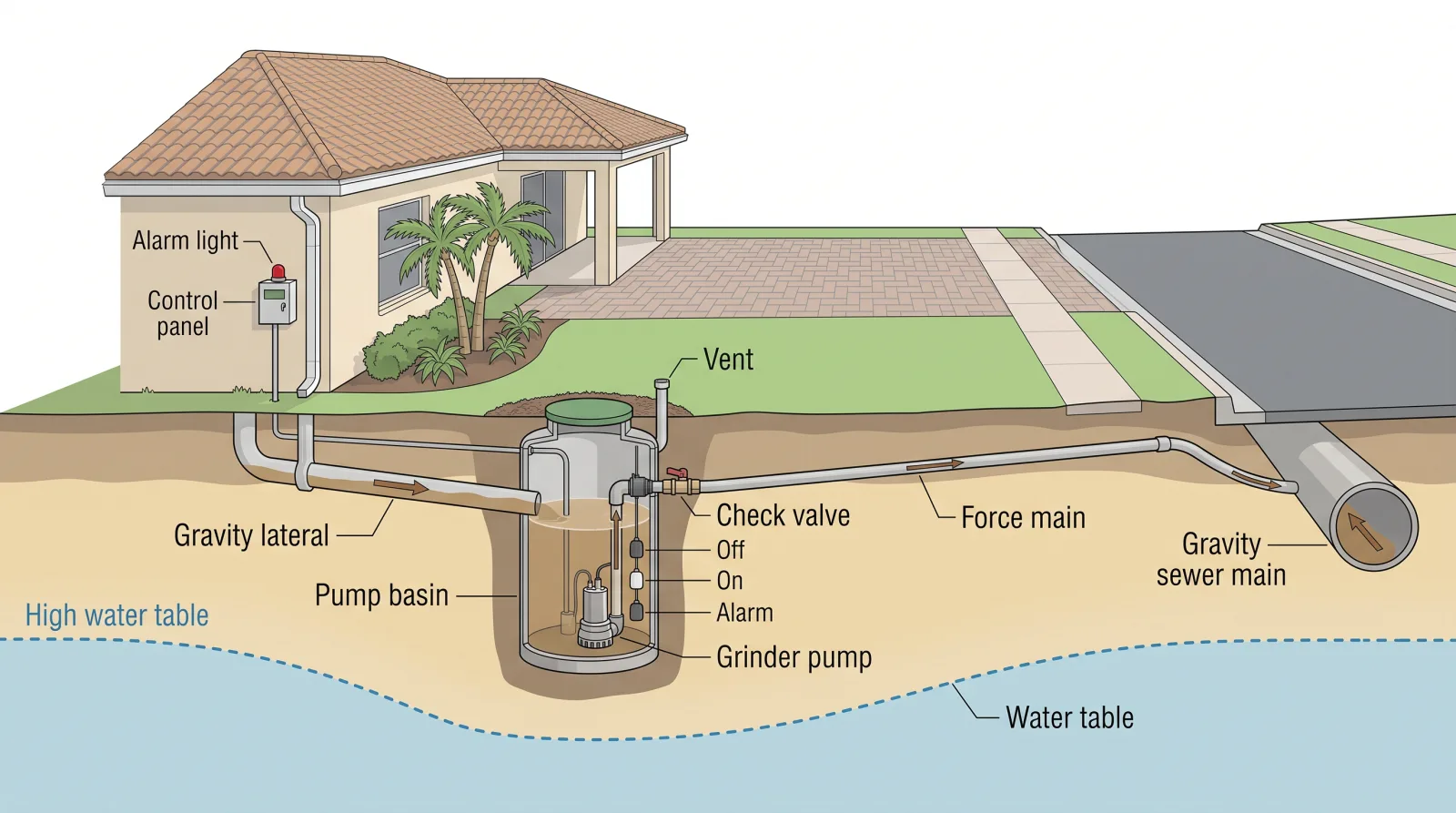
How a residential lift station works. When a home sits lower than the sewer main in the street, wastewater flows by gravity into a small pump basin beside the house. Float switches start a submersible grinder pump that pushes it up a force main to the municipal gravity sewer, and a control panel with an alarm light warns the homeowner if the pump fails.
Lift Stations: The Unsung Heroes of Wastewater Management
Lift stations, also known as sewage pump stations, play a pivotal role in both municipal and residential wastewater management systems. These installations are crucial where gravity sewer systems are impractical, using powerful submersible pumps to elevate wastewater to a higher elevation for further processing or disposal. Their design and operational efficiency are key to preventing system overloads and ensuring the seamless flow of wastewater toward treatment plants.

Installing a lift station in a parking building basement. The hole is dug with the help of shoring and a wellpoint dewatering system
Synergy with Stormwater Management Systems
Stormwater management systems are designed to control runoff water generated by rain or snowmelt. Efficient stormwater management is critical to reduce flooding, erosion, and pollution in water bodies. Lift stations complement these systems by managing excess stormwater, especially in urban areas where surface runoff cannot be absorbed naturally. They ensure that stormwater is efficiently transferred to treatment facilities, aiding in water reclamation and reuse efforts.
Enhancing Septic System Maintenance
In rural or suburban areas where centralized sewage treatment is not available, septic systems provide an effective solution for wastewater management. Lift stations are often integrated into these systems to pump effluent from septic tanks to drain fields, especially when terrain or soil conditions prevent gravity-based flow. Regular maintenance of these lift stations is crucial to prevent backups, leaks, and environmental contamination.
Advanced Technologies in Lift Station Design
The evolution of wastewater management technologies has led to significant advancements in lift station design. Modern stations are equipped with sophisticated sensors and controls to automate operations, minimizing the risk of failures and optimizing energy use. Sewage ejector systems and effluent pumping solutions are tailored to meet the specific needs of different applications, from residential complexes to industrial facilities.
Conclusion
Lift stations are indispensable to the effective management of stormwater and septic systems, ensuring that wastewater is safely and efficiently transported for treatment. Their role extends beyond mere conveyance; they are integral to environmental protection, water conservation, and public health. As technology advances, the functionality and reliability of lift stations continue to improve, offering sustainable solutions for wastewater management challenges.
For professionals and communities alike, understanding the operation and maintenance of lift stations is key to optimizing their stormwater and septic management strategies, ensuring a cleaner, safer environment for future generations.
